


My Group
My Group
Organizer:
- Organized by
-
-

CS2 Skin Rarity: Why $3 Skins Can Beat $300 Coverts
-
Discussion
-
A $3 Mil-Spec skin can be a better collector buy than a $300 Covert. That sounds backwards until you separate cs2 skin rarity from condition, supply, and actual player demand. I track sale prices rather than just inspecting the color label, and the biggest mistake I see is treating the rarity tier as a final price tag.
Rarity tells you how hard an item is to obtain from its source. It does not guarantee that people want it, that it looks good in-game, or that its float is desirable. A bright red Covert finish with weak visual appeal can sit unsold, while a clean pink Classified skin for a popular rifle moves quickly because players actually equip it.
For a detailed breakdown of the color hierarchy and how it is used, this cs2 skin rarity guide is a useful starting point. My own shortcut is simple: use rarity to estimate supply, then use the market to judge demand.
The normal CS2 rarity ladder
Most weapon finishes sit in one of these grades:
* Consumer Grade, usually white
* Industrial Grade, light blue
* Mil-Spec Grade, blue
* Restricted, purple
* Classified, pink
* Covert, red
* Contraband, orange
Consumer and Industrial skins are common collection filler. They matter for collectors, especially older map collections, but they usually do not command large prices without unusual floats, stickers, or discontinued supply.
Mil-Spec is where many case-opening results land. A skin such as AK-47 | Slate is not rare in the collector sense, but it has broad demand because it is clean, dark, and works well with stickers. That demand can keep its price healthier than a less popular Restricted skin.
Restricted and Classified grades are where I start checking trade-up value seriously. Classified items are particularly important because ten of them can be used in a contract for a Covert output. That creates a price floor in many collections. AK-47 | Redline is a classic example of a skin whose desirability has long exceeded what its pink rarity label alone would suggest.
Covert skins are the top standard weapon grade in cases. AWP | Asiimov, USP-S | Kill Confirmed, and Desert Eagle | Printstream all illustrate why red does not mean one uniform price range. The weapon, finish, wear range, case supply, and visual reputation all matter.
Contraband is separate. M4A4 | Howl is the famous example, and its value comes from its history, restricted supply, and collector status. You cannot treat Contraband as simply “one tier above Covert.” It is its own market.
Gold special items and why case odds matter
Case knives and gloves are generally shown as rare special items, often represented by gold. They are not normal Covert drops. The special-item pool can include many knife finishes, glove models, and wear levels, so pulling a gold item does not automatically mean hitting a high-value item.
Community case-opening data has long placed the rough odds near 80% Mil-Spec, 16% Restricted, 3.2% Classified, 0.64% Covert, 0.32% Exceedingly Rare, and about 0.26% for special items. Treat those as practical estimates from large samples, not as an excuse to open cases for profit. A case may contain an expensive knife, but the average opening is still dragged down by the mountain of low-value blues.
I log the source of every skin I watch. A Covert from an old, inactive case can become scarce even if the design is only average. A newer case Covert may look better but have much heavier supply. That is why case name matters. Fracture Case, Dreams and Nightmares Case, Kilowatt Case, and older discontinued cases do not behave the same way once their active supply changes.
Float is the second rarity system
Wear is not just a cosmetic label. Every skin has a float value from 0.00 to 1.00, though many finishes are capped within a narrower range. The common wear brackets are:
* Factory New: 0.00 to 0.07
* Minimal Wear: 0.07 to 0.15
* Field-Tested: 0.15 to 0.38
* Well-Worn: 0.38 to 0.45
* Battle-Scarred: 0.45 to 1.00
A Factory New skin is usually more expensive, but float can matter inside the same bracket. A 0.0008 Factory New can draw collector attention that a 0.062 Factory New does not. On the other side, some Battle-Scarred skins look surprisingly good at 0.45, while others become visibly rough.
Float caps are crucial. AWP | Asiimov cannot be Factory New because its permitted float range begins above that wear bracket. That limitation makes clean-looking Field-Tested examples more meaningful than a newcomer might expect. Before buying, inspect the finish in-game rather than assuming the wear name tells the full story.
Patterns, stickers, and the weapon itself
Pattern-based skins can ignore normal pricing logic. Case Hardened blue gems, Fade percentage, Doppler phases, and certain marble patterns can turn an ordinary rarity label into a specialist collector market. A low float does not make every pattern valuable, and a rare pattern does not automatically make every float acceptable. The best premiums happen when several factors line up.
Stickers add another layer. A scraped modern sticker usually adds little. A clean, well-placed older tournament sticker on a desirable weapon can add meaningful value, although sellers often overprice them. I compare actual completed sales, not just ambitious listings.
Weapon popularity matters too. The Tec-9 reference identifies it as a Terrorist-side semi-automatic pistol, which helps explain part of its market behavior. Even a strong Tec-9 finish has a narrower audience than an AK-47, AWP, M4A1-S, or Desert Eagle finish. Skins for guns players see every round tend to retain more attention.
Rarity is not a reason to gamble
I treat skins as collectibles with volatile prices, not a reliable investment vehicle. If you are looking into third-party gambling or case-style sites because a rare drop feels close, this community discussion thread is worth reading: https://www.reddit.com/r/cs2/comments/1qvpblo/what_risks_do_csgo_gambling_sites_pose/. The useful lesson is that rarity psychology can make bad odds feel personal.
My buying rule is boring but effective: identify the source, grade, float range, pattern, and recent sale range before paying a premium. A red item is not automatically valuable. A blue item is not automatically worthless. In CS2, real rarity is the overlap between limited supply, good condition, recognizable visuals, and players who still want to use the skin.
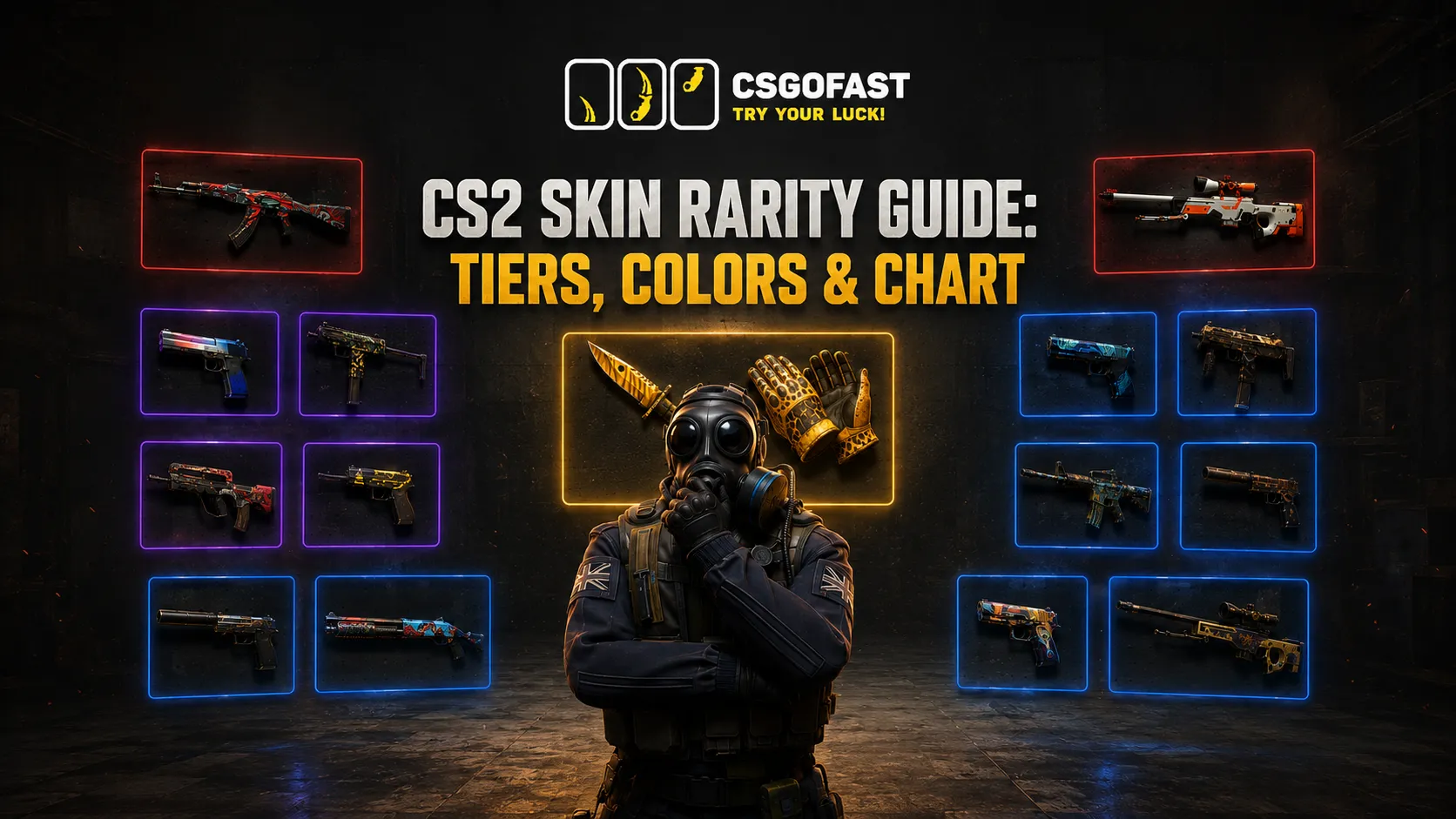
csgofast.com
CS2 Skin Rarity Guide: Tiers, Colors & Chart
CS2 skin rarity explained: every tier and color, a full rarity chart, and the cheapest red and pink rarity skins to grab in 2026.