

Master Sudoku Skills With Logic Challenges and Daily Practice
Sudoku is one of the most popular logic puzzle games in the world. Millions of players enjoy Sudoku every... View more
Organizer:
- Organized by
-
-

Master Sudoku Skills Through Logic Practice and Daily Challenges
-
Discussion
-
Introduction to Sudoku and Its Lasting Popularity
Sudoku is one of the most popular number puzzle games in the world. Millions of people enjoy this logical challenge every day through newspapers, websites, mobile applications, and printed puzzle books. Unlike many games that rely on luck, Sudoku focuses entirely on reasoning, concentration, and pattern recognition.
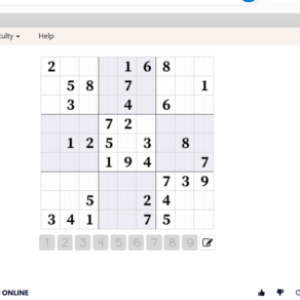
The objective is simple. A standard Sudoku grid contains nine rows and nine columns divided into nine smaller sections. Players must fill every empty cell with numbers from one to nine while following specific rules. Each number can appear only once in every row, column, and section. Although the concept is straightforward, solving a difficult puzzle can provide a rewarding mental workout.
The universal appeal of Sudoku comes from accessibility and depth. Beginners can learn the basic rules within minutes, while experienced players can spend hours mastering advanced solving techniques.
Understanding the Basic Structure of Sudoku
Before solving puzzles efficiently, it is important to understand the layout and rules that define Sudoku.
The Nine-by-Nine Grid
A traditional Sudoku puzzle consists of eighty-one cells arranged in a square grid. The grid contains nine rows and nine columns. These rows and columns are further divided into nine smaller boxes, each containing nine cells.
Some cells already contain numbers when the puzzle begins. These numbers serve as clues that guide the solving process.
Core Rules That Must Be Followed
Every Sudoku puzzle follows three fundamental rules. Each row must contain numbers from one to nine without repetition. Each column must also contain numbers from one to nine without repetition. Finally, each three-by-three box must contain every number from one to nine exactly once.
Following these rules allows players to determine the correct position for every missing number.
Why Every Puzzle Has a Logical Solution
Well-designed Sudoku puzzles can be solved through logic alone. Guessing is not necessary when proper techniques are applied. This characteristic makes Sudoku attractive to puzzle enthusiasts who enjoy analytical thinking and structured problem solving.
Benefits of Playing Sudoku Regularly
Sudoku offers more than simple entertainment. Regular practice can support several cognitive skills and mental habits.
Improved Concentration and Focus
Solving Sudoku requires attention to detail. Players must examine rows, columns, and boxes carefully while tracking possible number placements. This process encourages sustained concentration and reduces careless mistakes.
Enhanced Logical Thinking
Every move in Sudoku depends on logical deduction. Players evaluate available information and identify the only valid solution. Repeated exposure to these reasoning patterns strengthens analytical thinking abilities.
Mental Relaxation Through Structured Challenges
Many people find Sudoku relaxing because it creates a clear objective and a structured environment. Focusing on the puzzle can provide a temporary break from daily distractions and stress.
Essential Strategies for Solving Sudoku
Learning effective strategies can significantly improve solving speed and accuracy.
Scanning Rows and Columns
One of the most basic techniques involves scanning rows and columns for missing numbers. When a row contains eight numbers, identifying the missing value becomes simple. Repeating this process across the grid gradually reveals additional opportunities.
Using Candidate Numbers
When a cell cannot be solved immediately, players can consider all possible numbers that fit within the rules. These possibilities are often called candidates. As more numbers are placed, the candidate list becomes smaller until only one option remains.
Eliminating Impossible Options
Sudoku often becomes easier when players focus on removing incorrect possibilities rather than searching directly for correct answers. By analyzing neighboring rows, columns, and boxes, impossible numbers can be eliminated systematically.
Advanced Techniques for Experienced Players
As puzzle difficulty increases, advanced methods become increasingly valuable.
Hidden Singles and Naked Singles
A hidden single occurs when a number can only appear in one position within a row, column, or box. Even if several candidates exist in that cell, the placement becomes obvious after examining surrounding areas.
A naked single appears when only one candidate remains in a cell. This technique is among the most common methods used by experienced solvers.
Pair and Triple Analysis
Certain puzzles require examination of candidate groups. If two cells contain the same pair of candidates within a row, column, or box, those numbers can often be removed from other nearby cells. Similar logic applies to groups of three candidates.
Pattern Recognition Skills
Advanced Sudoku players frequently recognize recurring patterns. These patterns help identify solutions more efficiently and reduce the need for lengthy calculations. Continuous practice improves this ability over time.
Different Variations of Sudoku
The popularity of Sudoku has inspired numerous creative variations that offer unique challenges.
Mini Sudoku
Mini Sudoku uses smaller grids and fewer numbers. These puzzles are ideal for beginners or players seeking a quick challenge during short breaks.
Killer Sudoku
Killer Sudoku combines traditional Sudoku rules with arithmetic constraints. Groups of cells are assigned target sums, adding an extra layer of complexity and strategy.
Samurai Sudoku
Samurai Sudoku consists of multiple overlapping grids connected together. Solving these large puzzles requires patience, planning, and strong logical skills.
Online Interactive Sudoku
Digital platforms offer interactive features such as hints, difficulty settings, performance tracking, and timed challenges. These tools make Sudoku accessible to players around the world.
Tips for Becoming Better at Sudoku
Improvement comes through consistent practice and thoughtful analysis.
Start with easier puzzles before moving to higher difficulty levels. Focus on understanding logical reasoning rather than memorizing solutions. Review mistakes carefully to identify recurring weaknesses. Challenge personal limits by attempting puzzles with increasing complexity.
Maintaining patience is equally important. Difficult puzzles often require persistence, and progress may occur gradually rather than immediately. Every completed puzzle contributes to stronger problem-solving skills.
Why Sudoku Remains Popular Across Generations
Sudoku continues to attract players of all ages because it combines simplicity with intellectual depth. The rules are easy to understand, yet the solving process can remain engaging for years. Children enjoy the challenge of learning logical patterns, while adults appreciate the mental exercise and sense of accomplishment.
Modern technology has expanded access to Sudoku through websites and mobile applications. Players can enjoy thousands of puzzles ranging from beginner-friendly grids to expert-level challenges. This accessibility ensures that Sudoku remains relevant in a rapidly changing digital world.
Conclusion
Sudoku is far more than a simple number puzzle. It is a powerful exercise in logic, concentration, and critical thinking. With clear rules, endless puzzle variations, and meaningful cognitive benefits, Sudoku offers an enjoyable experience for players at every skill level. Whether solving a quick beginner grid or tackling an advanced challenge, regular practice can sharpen the mind and provide lasting satisfaction. As a timeless puzzle game, Sudoku continues to inspire millions of players through the rewarding process of logical discovery.