
-
Discussion
-
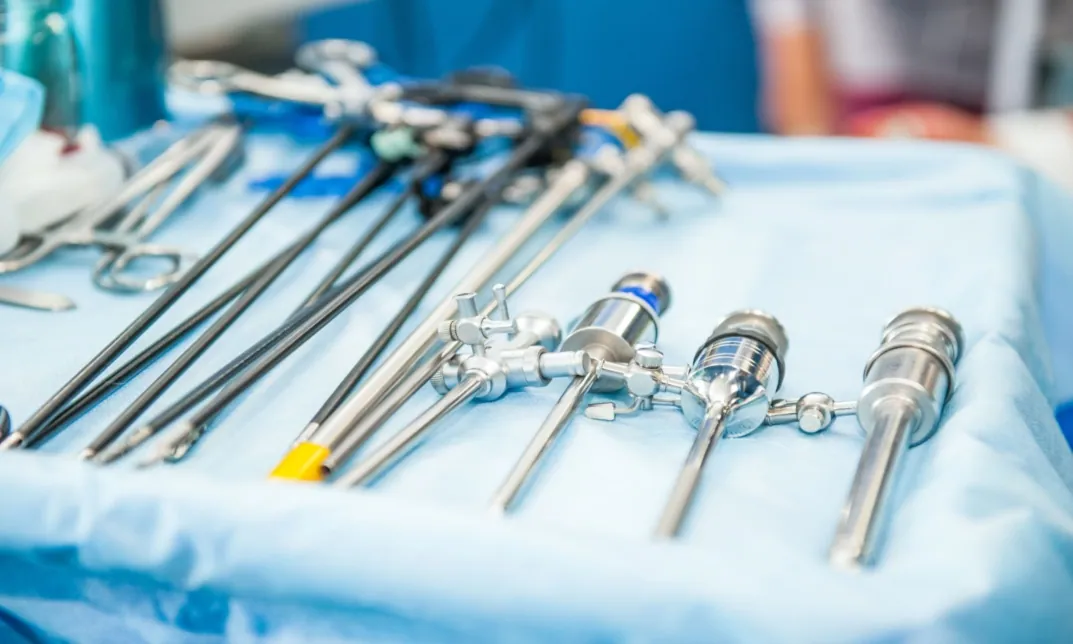
Electrosurgical instruments, particularly laparoscopic monopolar and bipolar devices, are indispensable in modern minimally invasive surgery. These instruments rely on specialized dielectric coatings to channel high-frequency electrical energy directly to the targeted operative tissue while protecting surrounding non-target structures from accidental burns. However, repeated exposure to mechanical handling, chemical cleaning agents, ultrasonic vibrations, and thermal sterilization cycles causes progressive degradation of this protective barrier.
The Hidden Clinical Risk: Understanding Dielectric Breakdown
Insulation failure is among the most dangerous latent hazards in surgical suites. Unlike gross mechanical defects such as bent shafts or broken jaws, dielectric breakdown often involves microscopic pores, micro-cracks, or sub-surface thinning invisible to the naked eye. During surgery, high-frequency electrical currents search for the path of least resistance; if the dielectric coating is compromised, stray electrical energy escapes through these micro-fissures.
This stray energy can cause unseen capacitive coupling or direct thermal arcing to adjacent bowel, blood vessels, or pelvic structures outside the surgeon’s endoscopic field of view. Because thermal bowel perforations often take 48 to 72 hours to present clinically as peritonitis or sepsis, preventing compromised instruments from entering the sterile field is paramount. Identifying and isolating an instrument that fails an electronic insulation test is a direct intervention in patient safety.
Immediate Quarantine and Chain of Custody Protocol
The moment an instrument fails a high-voltage porosity test or low-voltage continuity scan at the prep-and-pack workstation, strict quarantine protocols must be activated immediately. Technicians should never attempt to re-test the device repeatedly in hopes of obtaining a passing result, as erratic readings are themselves an indicator of intermittent dielectric failure.
-
Immediate Removal: Withdraw the failed instrument from the assembly line instantly to prevent accidental inclusion in standard procedural trays.
-
Physical Tagging: Affix a high-visibility, red quarantine tag to the device indicating the exact location of the dielectric breach (e.g., “Shaft mid-point spark failure” or “Collet ring breakdown”).
-
De-Linking: If the instrument is part of a modular or multi-part assembly (such as a take-apart laparoscopic grasper), isolate the specific component rather than discarding the entire functional handle assembly.
-
Electronic Logging: Record the failure in the department’s instrument tracking software (ITS) against the specific tray identification barcode and lot number.
Root-Cause Analysis: Why Reprocessing Degrades Insulation
Repeated reprocessing exerts severe chemical, mechanical, and thermal stresses on electrosurgical coatings such as fluoropolymers, polyolefin heat-shrink sleeves, and silicone formulations. Understanding why an instrument failed aids in identifying whether the issue is standard lifecycle exhaustion or improper handling techniques.
-
Thermal Expansion Cycling: Autoclaving subjects polymers to rapid thermal swings ($132^\circ\text{C}$ to $135^\circ\text{C}$ under dynamic pressure). Over repeated cycles, differences in thermal expansion coefficients between the metal core and outer polymer sleeve cause delamination and micro-fracturing.
-
Chemical Incompatibility: Using high-pH or non-neutral enzymatic detergents can gradually soften, haze, or dissolve protective polymer bonds, accelerating dielectric decay.
-
Mechanical Pinching: Stacking heavy instrument sets directly on top of insulated shafts or clamping insulated shafts in metal basket dividers creates pinch points where the coating shears.
-
Ultrasonic Fatigue: Excessive ultrasonic cavitation can compromise bonded seams on heat-shrink sleeves if exposure parameters exceed manufacturer instructions for use (IFUs).
Troubleshooting and Verification: Differentiating True Failure from False Positives
Before permanently removing an expensive surgical asset from service, technicians must rule out procedural anomalies that cause false test readings. Moisture is the leading cause of false-positive insulation test results; residual rinse water inside the lumen or along the shaft creates conductive paths that trigger false alarms on porosity detectors.
To verify a true failure, ensure the instrument has cooled completely to ambient room temperature and is entirely dry. Inspect the device under a 10x illuminated optical magnifier to visually check for blistering, scoring, bubbling, or peeling near the working tip and distal collar. If the instrument is dry, visually intact, but consistently fails the voltage threshold recommended by the original equipment manufacturer (OEM), the dielectric strength is officially compromised.
Elevating Departmental Standards Through Professional Training
Managing complex instrumentation requires deep technical literacy across electro-physics, biomaterials, and infection prevention standards such as ANSI/AAMI ST79. When sterile processing personnel understand the mechanics of electrical surgical currents and the precise limitations of barrier coatings, the incidence of missed defects drops substantially.
Technicians who undergo structured education through an accredited sterile processing technician course gain essential competencies in functional testing, visual magnification inspection, and rigorous standard operating procedures (SOPs). Comprehensive professional training empowers technicians to interpret complex manufacturer IFUs, operate electronic insulation testing equipment properly, and make evidence-based decisions regarding whether an asset should be recoated, repaired, or decommissioned.
Disposition, Biomedical Escalation, and Vendor Management
Once a true failure is confirmed and documented, the sterile processing department (SPD) leadership must manage the disposition channel based on hospital capital and maintenance agreements. Instruments should not remain in limbo within the preparation area.
Facilities should establish clear routing pathways:
-
OEM or Third-Party Re-Insulation: If the underlying metal core and mechanical jaw linkages are within calibration tolerances, the instrument can be sent to an ISO 13485-certified third-party repair vendor for complete stripping, recoating, and dielectric re-certification.
-
Biomedical Engineering Review: In cases involving proprietary or high-complexity energy devices (such as advanced ultrasonic/bipolar combination shears), route the device to internal clinical engineering for official retirement.
-
Decommissioning: Devices with severe metal pitting, corrupted joint mechanisms, or repeated insulation failures on replacement sleeves should be decommissioned and permanently recycled to prevent reintroduction into clinical inventory.
Conclusion
Insulation testing is a non-negotiable quality assurance standard that stands directly between surgical patients and preventable intraoperative thermal injuries. When an electrosurgical instrument fails testing after repeated reprocessing, treating the incident with immediate quarantine, structured root-cause documentation, and professional disposition safeguards both patients and clinical teams. By maintaining modern inspection tools, adhering to rigorous manufacturer guidelines, and investing in ongoing technician education, sterile processing departments uphold the highest standards of surgical safety.
schoolofhealthcare.net
Sterile Processing Technician Course | Qualify Now
Train to be a Sterile Processing Technician. Master decontamination and safety. Enrol now in our course today.
-

